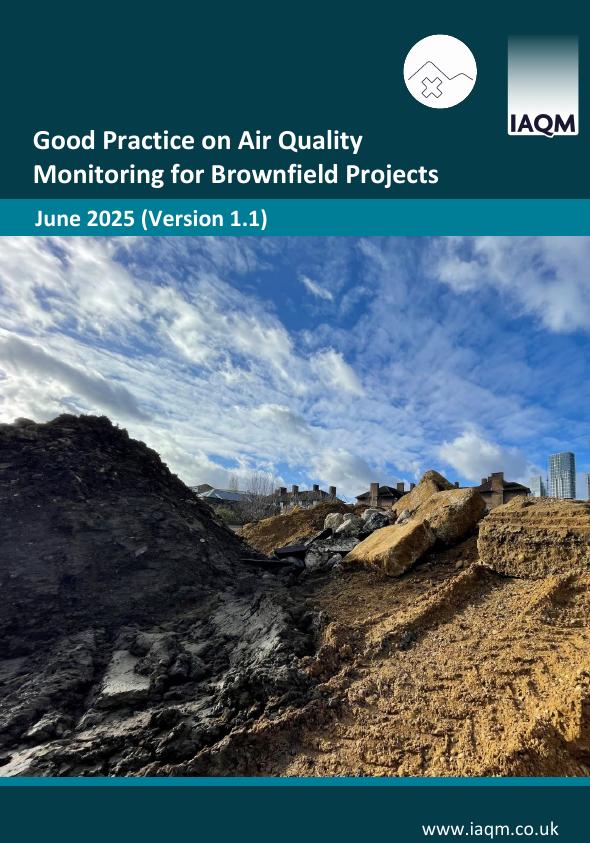
The Institute of Air Quality Management (IAQM) has announced an open consultation period for its newly developed guidance, "Good Practice on Air Quality Monitoring for Brownfield Projects." This document has been collaboratively created by a dedicated cross-sector working group, comprising members from the IAQM itself and the IES Land Condition Community and it is now open for comments. The consultation period will be for four weeks and will close at 5pm on Monday 15th July.
Sites that previously hosted an industrial plant (known as Brownfield sites), present valuable opportunities for revitalizing inner city areas and supporting urban growth. In the UK, planning policy encourages a “Brownfield First” approach, prioritizing the redevelopment of previously used land. However, these sites often require extensive cleanup to address contamination—particularly from hydrocarbons and chlorinated compounds—which, if left untreated, can seep into the soil, groundwater, and surface water, posing environmental risks. Often these areas emit odours that could affect people living in that area after development.
The process of cleaning up contaminated land is commonly referred to as remediation. Within this guidance, remediation encompasses all actions taken to treat the soil or ground beneath a site, making it safe for future use and minimizing the risk of contamination impacting human health or the environment.
It is important to recognize that, during remediation, the same substances that pollute soil and water can also be released into the air. These airborne contaminants may cause unpleasant odours. While regulations are in place to control odour emissions in UK, past approaches to brownfield remediation have not always adequately addressed the full spectrum of air quality impacts.
To ensure comprehensive protection, it is important that the potential release of odours is thoroughly considered in every brownfield project. This requires the use of robust monitoring practices and careful review of monitoring results. By adopting good practice in monitoring and managing emissions, brownfield redevelopment can proceed in a way that safeguards both public health and the environment, while unlocking the benefits of urban regeneration.
The primary intention of this guidance is to equip readers with practices for designing and executing ambient air quality monitoring programs on sites undergoing environmental remediation and other types of land redevelopment. These sites, often referred to as "brownfield sites" in the UK, are typically former industrial or commercial properties requiring extensive cleanup before they can be safely redeveloped for new uses.
While the document's central focus is on emissions of volatile organic compounds (VOCs)—substances that can be released during cleanup activities and impact air quality, cause odors, or potentially affect health—it emphasizes that many of its core principles are broadly applicable. This allows for the effective monitoring of other volatile airborne pollutants that might arise during the remediation of contaminated land, ensuring comprehensive environmental protection.
Furthermore, the guidance provides valuable suggestions for conducting comprehensive analysis against a wider range of criteria. This is specifically designed to protect the health of communities situated near remediation sites. It also outlines clear recommendations for communicating potential risks effectively to all relevant stakeholders, ensuring transparency and public safety throughout the redevelopment process.
The IAQM is actively seeking comments from its membership on the contents of the draft guidance. Feedback should focus specifically on the document's clarity and its intended purposes. The consultation period will run for four weeks, concluding at 5:00 PM on Monday, July 15, 2025. People are encouraged to submit their comments to info@iaqm.co.uk before this deadline.
And this is a note from Carlos Diaz, I would say that they are open to receive comments from non-IAQM members.
Read more about this and download the draft here.
If you find this article interesting, you might also be interested in these articles.
- Best Practice in Odour Control Management, 6th of February 2014, Nottingham, UK.
- The H4 Odour Management Guidance has been recently revised.
- When Theory does not Match Common Sense. A typical Case Study of an Intensive Pig Farm in the UK
- Grab here the list of presentations and videos of the 9th IWA Odour Management Conference 2021
- Economic Impact of the lack of Odour Management
