There is no translation available.
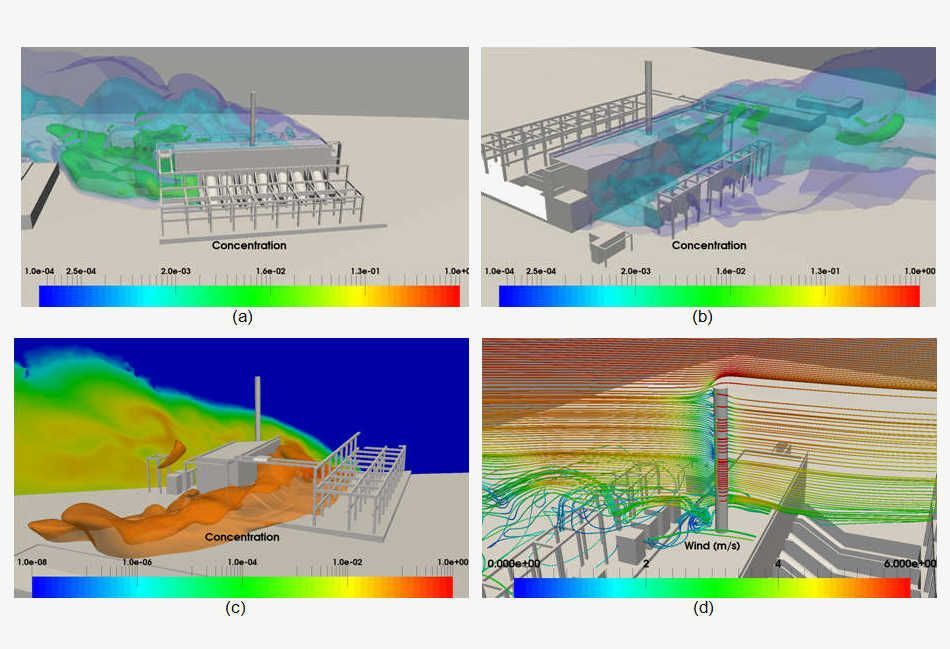 In this sewage plant under consideration, the wastewater is moved vertically using eight Archimedes screw pumps. During the process of moving the wastewater upward, there is an emission of H2S from the surfaces of the Archimedes pumps. Traces of H2S have been detected inside of the building that houses the pump engines.
The present paper evaluates a modification in the HVAC system of the building to mitigate the presence of H2S inside the building.
P. A. Tarela1 and F. E. Camelli2
1. CCyA Ingeniería, Buenos Aires, Argentina. ptarela@ccyaingenieria.com.ar
2. Laboratory for Computational Fluid Dynamics, Department of Physics and Astronomy, George Mason University, Fairfax, Virginia, USA.
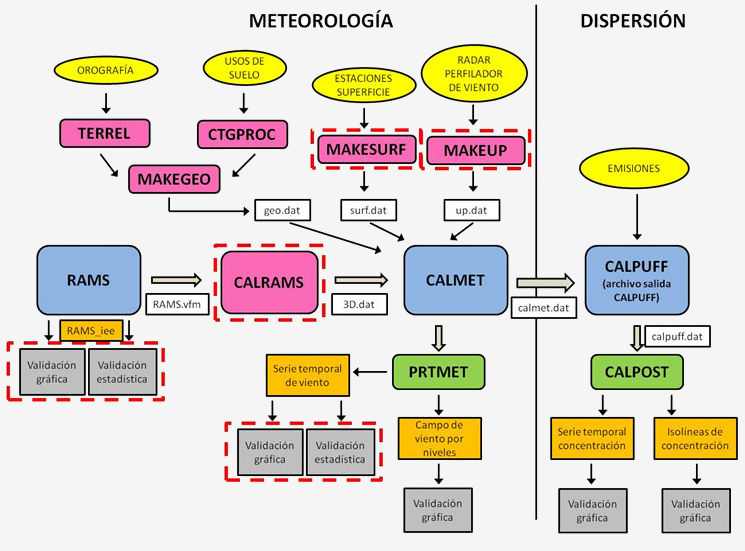 The current problems in relation to odor pollution episodes make it necessary to have methods to assess odor impacts. Such assessment can be performed using dispersion models that allow to estimate odor concentrations considering the emissions, the meteorology and the topography, among other data.
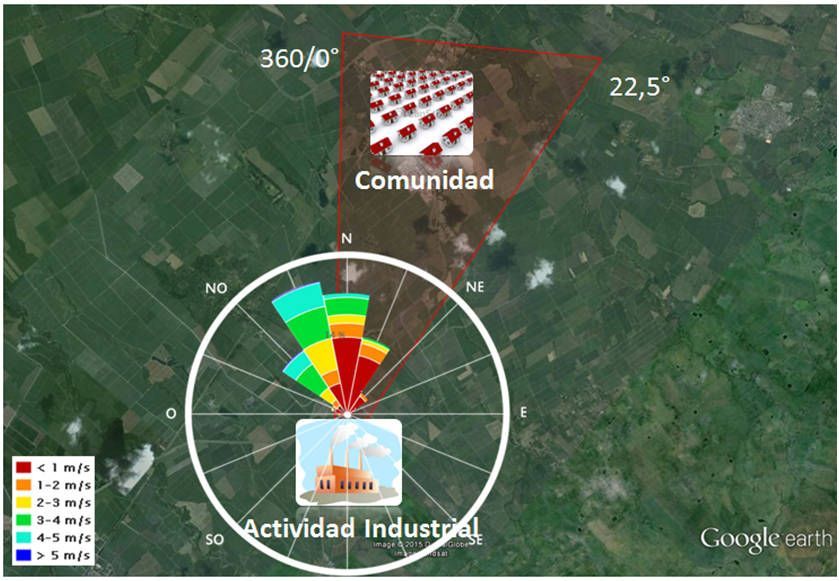 While there is currently a huge gap between odor and gases, since the smell is a complex mixture of gases which are capable of interact between each other. Therefore various gaseous compounds might generate different odorant stimuli than the single gas compound, so you may consider that monitoring gaseous emissions as a valid alternative as an operational tool.