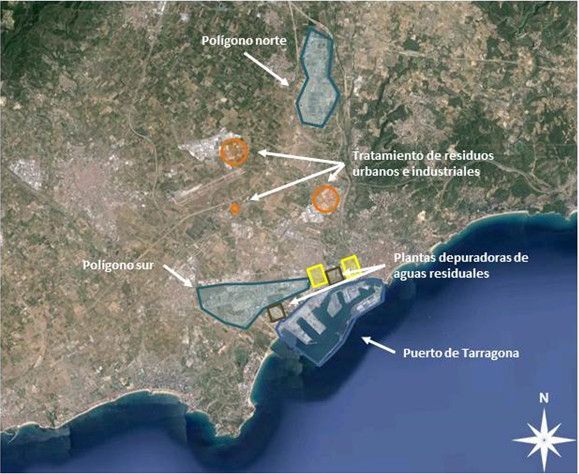
 Nasapp is an odour episode management system through citizen participation. It allows to have a summary of situation in real time from any portable device or computer. In this paper we studied the advantages of incorporating the automatic calculation of trajectories models of air in each record made by volunteer citizens.
The result is a substantial improvement in the visualization of complex problems, especially when there is diversity of odour sources. It was also verified the possibility of assigning causal percentages of odour episodes in each source, verifying meteorological and geographic influences, as well as validating the assignment of odour descriptors to known odour sources.
Pablo Ramos1, David Cartelle2,3, Carlos Diaz4
1CTQC Centro Tecnológico de la Química de Cataluña, Carrer de Marcel·lí Domingo, 43007 Tarragona, Spain.
2Troposfera Soluciones Sostenibles, S.L., c/Real 217, Bajo. 15401 A Coruña, Spain
3 Departamento de Ingeniería Química, Universidade de Santiago de Compostela, 15782 Santiago de Compostela, Spain
4Prolor, C/Uribitarte, nº6, Planta Baja - 48001, Bilbao, Spain.
Corresponding author(s): Pablo Ramos, pablo.ramos@ctqc.org
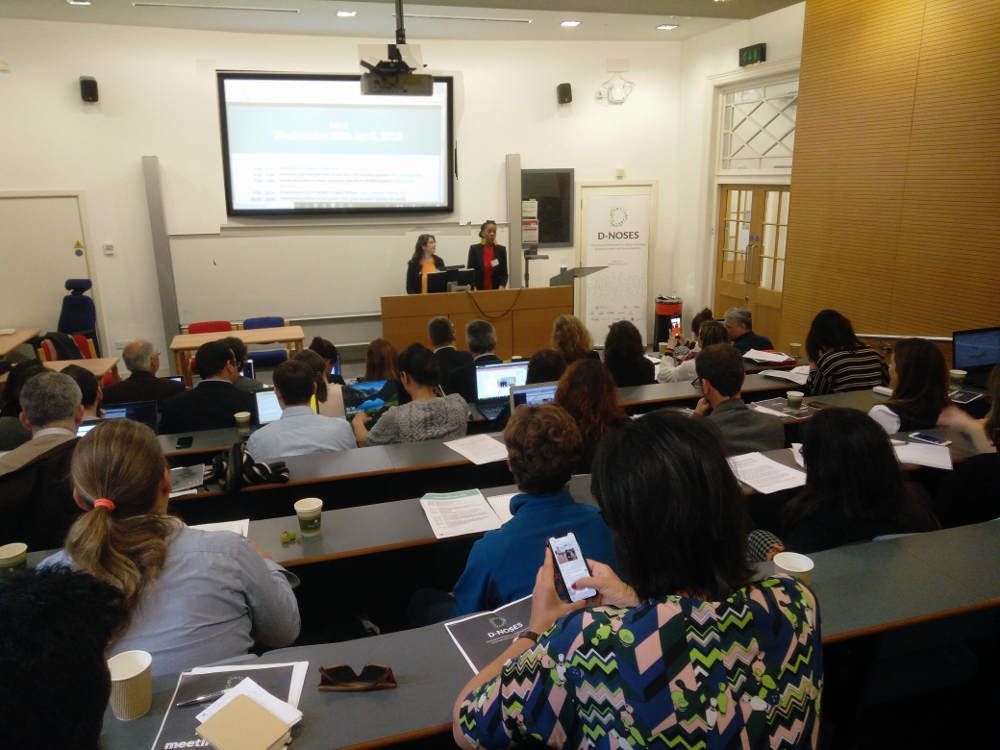 D-NOSES stands for Distributed Network for Odour Sensing Empowerment and Sustainability (not to be confused with e-noses). This project has got a budget of 3.2 million Euro from the project Horizon 2020 of the European Union. The kick-off meeting just took place last week in London. A group of several companies, research universities, public administrations and NGOs will participate in this project to develop a tool for citizen odour monitoring.
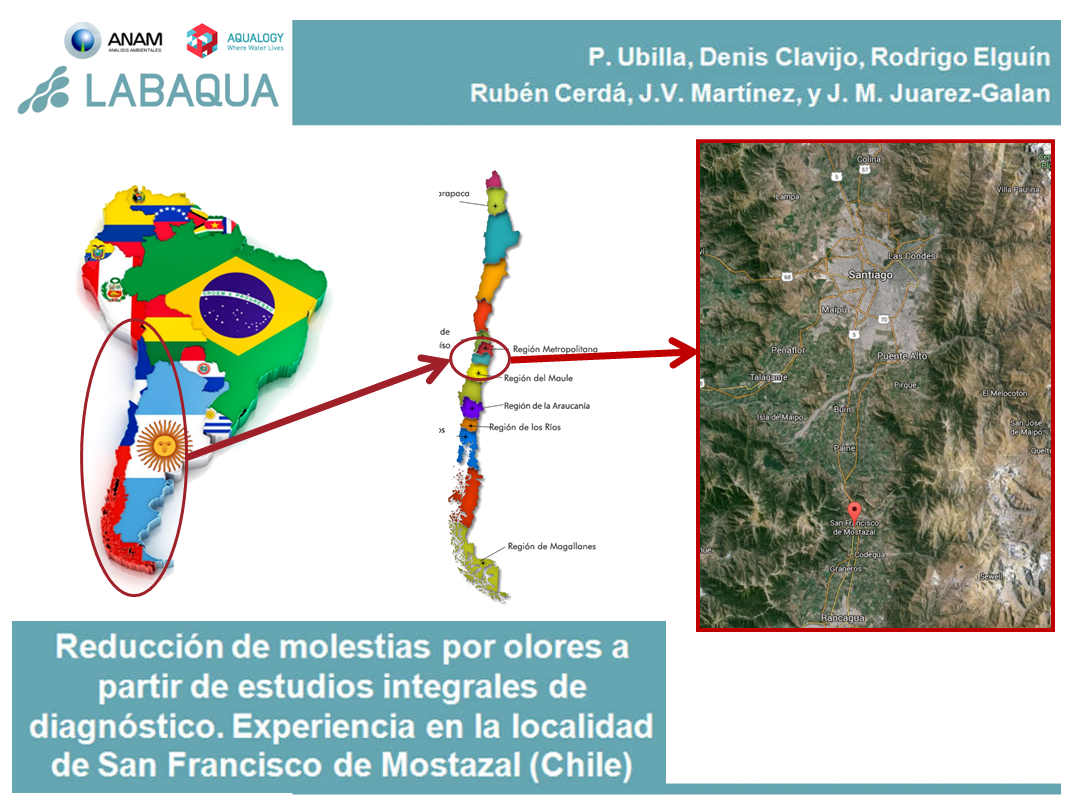 The relationship between the odors emitted by a given facility and the influence they cause on the population living in the surrounding area is very complex to determine. For these reason, a comprehensive study has been carried out at the Municipality of 'San Francisco de Mostazal', in Chile.