Sponsored Content  

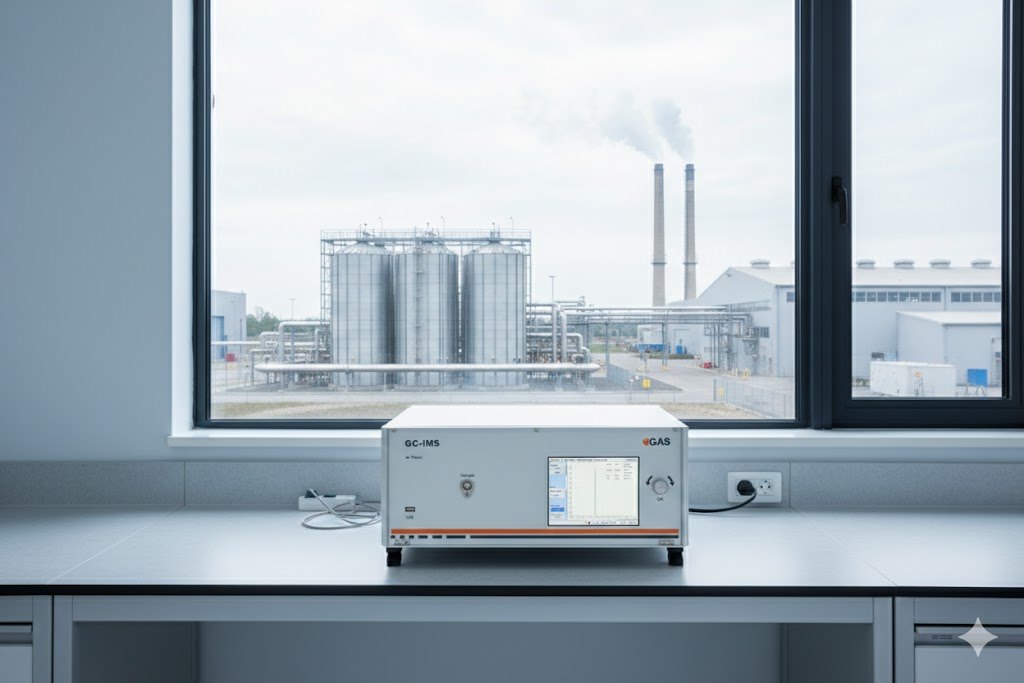
GC-IMS is no longer “just” an interesting technique for odour work – it is becoming the reference backbone for serious, defensible environmental odour analysis. Around the world, leading labs and consultants are quietly adding it to their toolbox and discovering how much more robust, fast and objective their odour assessments can become. GC-IMS (Gas Chromatography – Ion Mobility Spectrometry) delivers 2D separation, sub‑ppbv sensitivity and rugged, portable hardware that goes where the odour problem really is: at the stack, on the boundary, in the plant. With IMS operating at ambient pressure using a Tritium beta source (IAEA/EURATOM exempt, no licence required) and water-based reagent ions, you avoid vacuum systems, fragmentation and the associated dilution effects, while still obtaining direct, high‑quality VOC fingerprints you can correlate with sensory data.​

   For years, odour units have been accepted but often questioned by operators, regulators and neighbours because they lack chemical transparency. GC-IMS changes that equation by measuring real VOC fingerprints in gas samples at sub‑ppm level with orthogonal GC+IMS separation, providing high selectivity across a wide range of volatiles. The instruments are compact and rugged, can be integrated in mobile labs or vans with an on‑board nitrogen generator, and need only mains power on‑site. Instead of discussing “odour annoyance” in abstract terms, you can present two‑dimensional plots, peaks and fingerprints that clearly differentiate sources and operating conditions.​

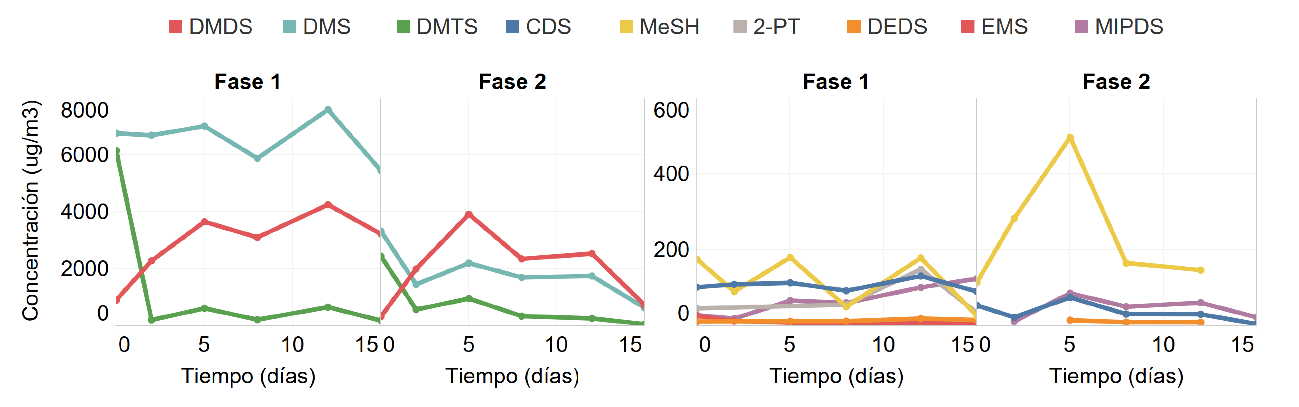
   Wastewater treatment configuration and operation influence the temporal variability of odour emissions from anaerobically digested biosolids.

   Analysis using GC-SCD, TD-GC-MS, and sensory evaluation revealed higher concentrations and detection frequencies of key VSCs (DMDS, DMS, DMTS, MeSH) during Phase 1, often exceeding odour thresholds and challenging their beneficial reuse. Extended monitoring is advised to improve management practices and support sustainable land application.

T. Guerrero1,*, R. Fisher1, A. Prata1,2 & R. Stuetz1

1UNSW Water Research Centre, Departament of Civil and Environmental Engineering, University of New South Wales – UNSW Sydney, Sydney, Australia

2Department of Environmental Engineering, São Paulo State University “Júlio de Mesquita Filho” – UNESP/Rio Claro, Brazil

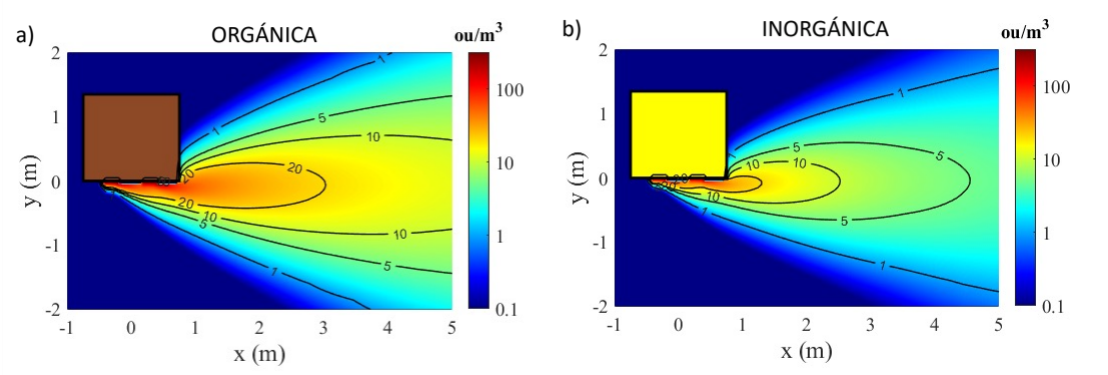
   This study analyzes the odor production of Municipal Solid Waste (MSW) in Córdoba, Spain, through physicochemical characterization and the identification of Volatile Organic Compounds (VOCs). 

   The results show variations in odor emissions based on the season and districts, with the majority composition of VOCs being alkanes, aromatic hydrocarbons, and ketones. Additionally, odor concentration is influenced by the container fill level and atmospheric conditions, reaching up to 100 ou/m³ in nearby areas.

M.A. Martín1*, M. Salinas1, H. Martínez1, E. Muñoz2, M.C. Gutiérrez1, F. Tavares3, A.F. Chica1, J.A. López1.

1 Departamento de Química Inorgánica e Ingeniería Química (Área de Ingeniería Química). 2 Departamento de Física.
1,2 Facultad de Ciencias.
3 Departamento de Mecánica. 3Escuela Politécnica Superior, Universidad de Córdoba. Campus universitario de Rabanales. Carretera N-IV, km 396, 14071 Córdoba.

*iq2masam@uco.es

More Articles …

All the content here under Creative Commons license