 In this study, the application of the technique Gas Chromatography coupled to Ion Mobility Spectrometry (GC-IMS), for the detection of odorous volatile compounds in the indoor air of an urban waste treatment facilities, was evaluated.
For the identification of the detected compounds, data obtained from GC-IMS and Gas Chromatography - Time of Flight Mass Spectrometry (GC-ToFMS) were used. Results obtained demonstrated that the technique GC-IMS allows the detection of different types or odorous compounds such as: alcohols, ketones, terpenes and esters, arising from treatment processes of urban waste.
Eloy Y. Companioni Damas*, Estel·la Pagans Miró, Carmen Villatoro González, Luciano Vera Carrasco.
*Odournet. SL. Parque Empresarial Trade Center. Avenida de las Cortes Catalanas, 5-6, 08173 Sant Cugat del Vallès · Spain
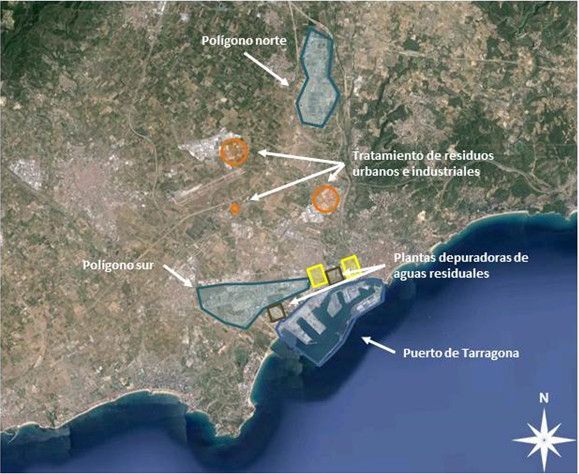 Nasapp is an odour episode management system through citizen participation. It allows to have a summary of situation in real time from any portable device or computer. In this paper we studied the advantages of incorporating the automatic calculation of trajectories models of air in each record made by volunteer citizens.
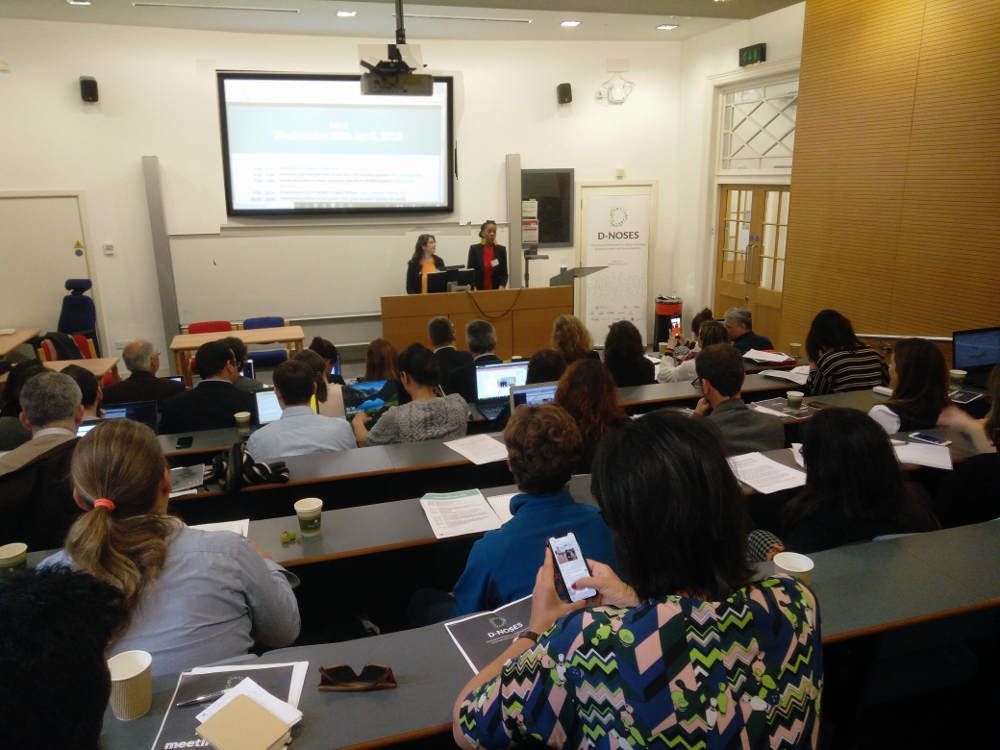 D-NOSES stands for Distributed Network for Odour Sensing Empowerment and Sustainability (not to be confused with e-noses). This project has got a budget of 3.2 million Euro from the project Horizon 2020 of the European Union. The kick-off meeting just took place last week in London. A group of several companies, research universities, public administrations and NGOs will participate in this project to develop a tool for citizen odour monitoring.