There is no translation available.

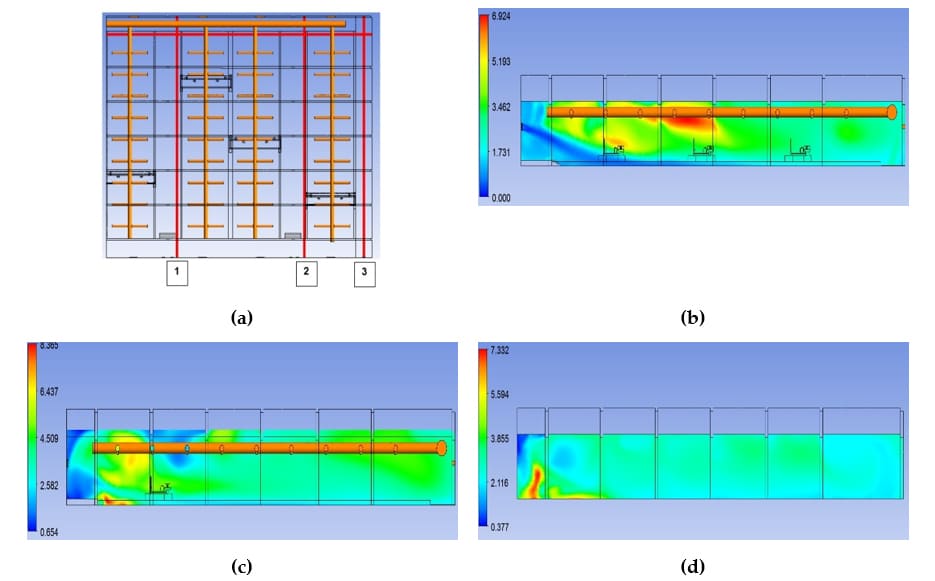
   This study evaluates a push-pull ventilation system with localized extraction designed to reduce H2S concentrations in the settling stage of a wastewater treatment plant in Santiago, Chile.

   CFD simulations and field measurements show that the existing crossed ventilation system results in H2S concentrations up to 21 mg/m³ over the water surface. The improved push-pull system effectively lowers H2S levels in the plant corridors to below 7.5 ppm, complying with Chilean regulations.

I. Polanco1, M. Rodríquez1, A. Hammad2, A. Haddad3, V. Tam4  & D. Vasco1

Department of Mechanical Engineering, University of Santiago de Chile, Santiago, Chile. ivan.polanco@usach.cl
Faculty of Built Environment, University of New South Wales, Sydney, Australia
Department of Civil Construction, Federal University of Rio de Janeiro, Rio de Janeiro, Brazil
School of Built Environment, Western Sydney University, Penrith, NSW, Australia
There is no translation available.

   The agro-industrial sector generates emissions of gases such as methane, ammonia, and hydrogen sulfide, which affect air quality and contribute to climate change.

   The Ubiproc® system employs biological filtration through microbial biofilms in closed organic waste pits, combined with real-time gas monitoring to optimize management. Field trials demonstrated maximum removal efficiencies of 87% for ammonia and 70% for hydrogen sulfide, with consistently stable average performance throughout the operational period.

D. Sepulveda, G. Villouta, C. Carrasco & V. Leon

Research and Development Department, Bioproc SpA., Concepción, Chile

There is no translation available.

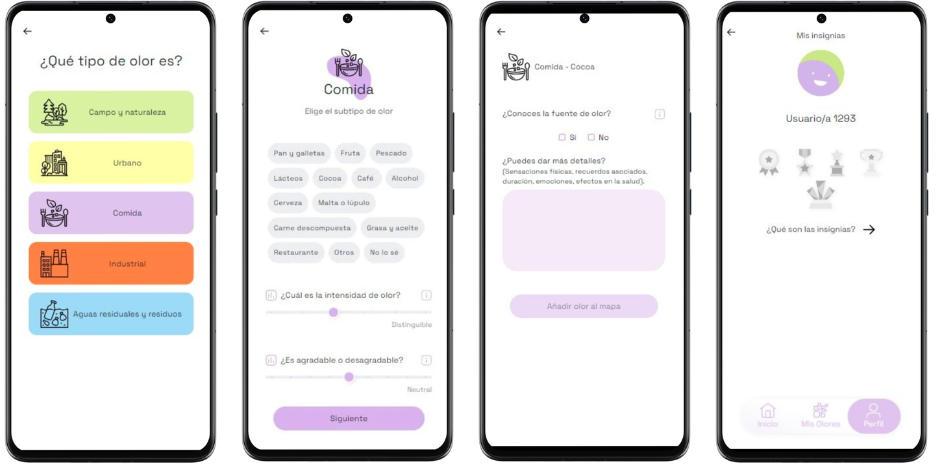
   OdourCollect is an innovative citizen science platform developed to enhance the monitoring and management of odour pollution, especially in complex settings with multiple emission sources.

   By actively involving local communities in the detection and reporting of odour events, the platform produces collaborative, real-time odour maps that are integrated with meteorological and regulatory information. This participatory methodology not only improves the characterisation and localisation of odour impacts but also facilitates compliance with the UNE 77270:2023 standard. Consequently, OdourCollect serves as an effective tool for environmental consultants, public authorities, and citizens to comprehensively manage odour-related environmental challenges.

R. Arias* & J. Burbano

Science for Change, C. de Vilamarí, 50, Planta 7, Eixample, 08015 Barcelona
rosa.arias@scienceforchange.eu

Altri articoli …

All the content here under Creative Commons license