There is no translation available.
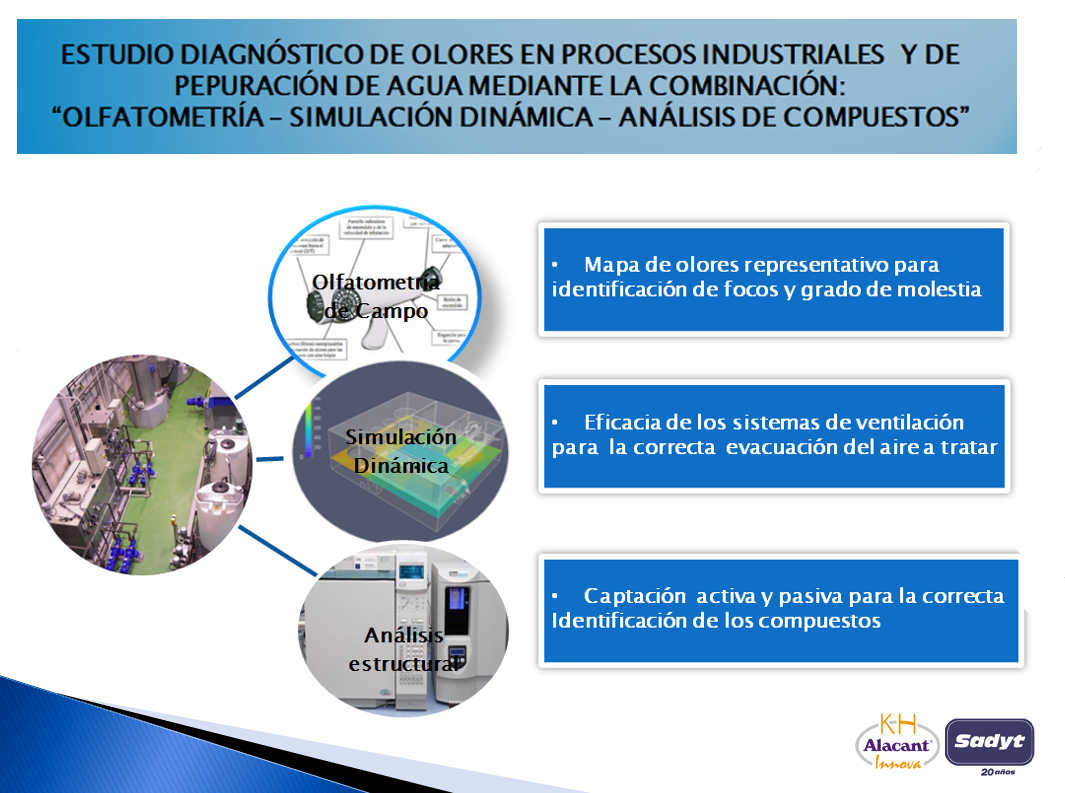 Many industries generate strong odors emissions throughout the production process. The subjective nature of odor, together with the difficulties in their diagnosis and search for appropriate solutions, make this study becomes an effective tool for success. The experience is based on the association of three evaluation criteria applied simultaneously: olfactometric criterion for "identification of the nuisance", dynamic simulation criteria for "visualization of behavior in space" and structural analysis criteria for a "better elimination of causal compounds."
M. Calzada 1*, E. Campos 1, D. Zarzo 1, P. Terrero 1, E. Ortiz 2, J.A. Garcia 3, B. Calderón 3, A. Fullana 3 and D. Prats 3
1. SADYT. Molina de Segura, 8. 30007. Murcia.
2. KHAlacant Innova. Carretera de Alicante, Km 4. 03690. San Vicente del Raspeig.
3. Instituto del Agua y de las Ciencias Medioambientales. Universidad de Alicante. San Vicente del Raspeig. 03690. Alicante.
*macalzada@sacyr.com
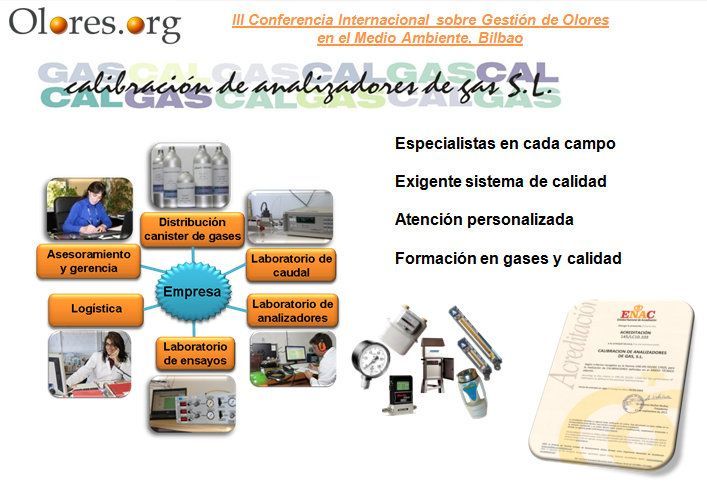 Olfactometers and equipment of dilution used in odour laboratories must be calibrated regularly. It is one of the quality requirements of the UNE-EN 13725 standard.
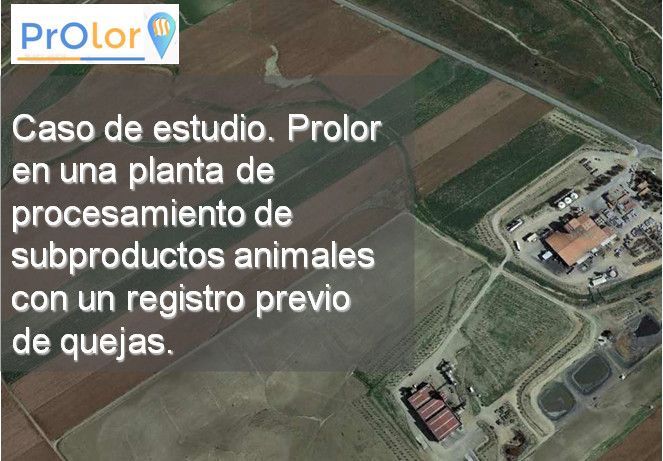 PrOlor is the first commercial software application in the world that is able to forecast an odor incident two days beforehand by using advanced dispersion modeling and odor measurements at the source.