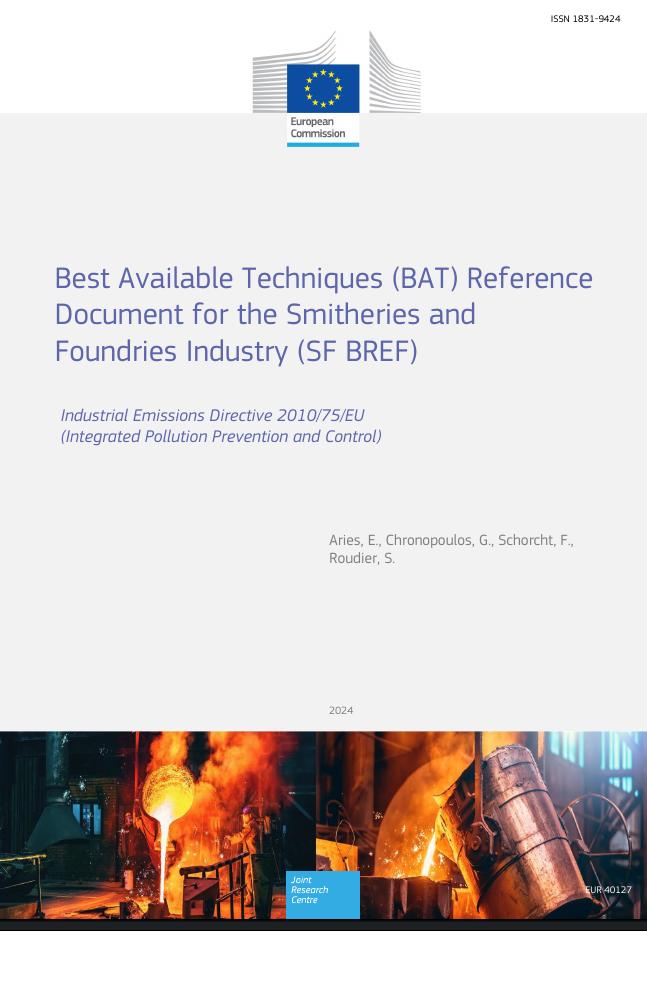
The European Commission's new Best Available Techniques Reference Document for the Smitheries and Foundries Industry (SF BREF), has been recently published on 6 December 2024. This BREF establishes stringent guidelines aimed at reducing the environmental impact of foundries and smitheries across the European Union, with an emphasis on odour management and control.
Odour management emerges as a key focus in this new SF BREF, reflecting growing concerns about the impact of industrial odours on local communities. The document introduces new approaches to odour control, including mandatory implementation of odour management plans and advanced monitoring techniques. These new provisions represent a significant shift from the previous BREF, highlighting the increasing importance of addressing odour issues in the industry.
One of the most significant changes in the new BREF is the introduction of Best Available Technique 32 (BAT 32), which mandates the implementation and regular review of an Odour Management Plan as part of the Environmental Management System. This requirement, not present in the previous BREF, demonstrates a more proactive approach to odour control.
BAT 33 introduces specific odour monitoring requirements, including the use of dynamic olfactometry (EN 13725) and odour exposure determination (EN 16841). This represents a more structured and standardised approach to odour assessment compared to the previous BREF, ensuring more consistent monitoring practices across the industry.
The document also introduces BAT 34, which outlines a series of techniques for preventing and, where prevention is not feasible, reducing odour emissions. BAT 34 outlines various methods to reduce odour emissions. These methods include the capture and treatment of odorous gases, the use of biofilters or scrubbers, and the optimisation of thermal oxidation processes.
The BREF addresses ammonia emissions, particularly in core-making processes. It recommends that core curing should be well-ventilated and confined to effectively capture released ammonia and formaldehyde.
Existing installations have been granted a four-year grace period to adapt to the new requirements, including those related to odour management. This phased approach, while maintaining the same timeline as the previous BREF, acknowledges the significant changes in odour control expectations and allows businesses time to implement necessary upgrades.
Download the new FS BREF here.
If you find this article interesting, you might also be interested in these articles:
- The First odour emission limit for 28 European countries is here.
- Published 2 new BREFs bringing more requirements on odour management.
- Approval of the conclusions of the new BATs for Waste Water/Gas in the chemical sector.
- Published the BAT Conclusions for Slaughterhouses, Animal By-Products and Edible co-products industries
- What happened in the odour management world in 2024
