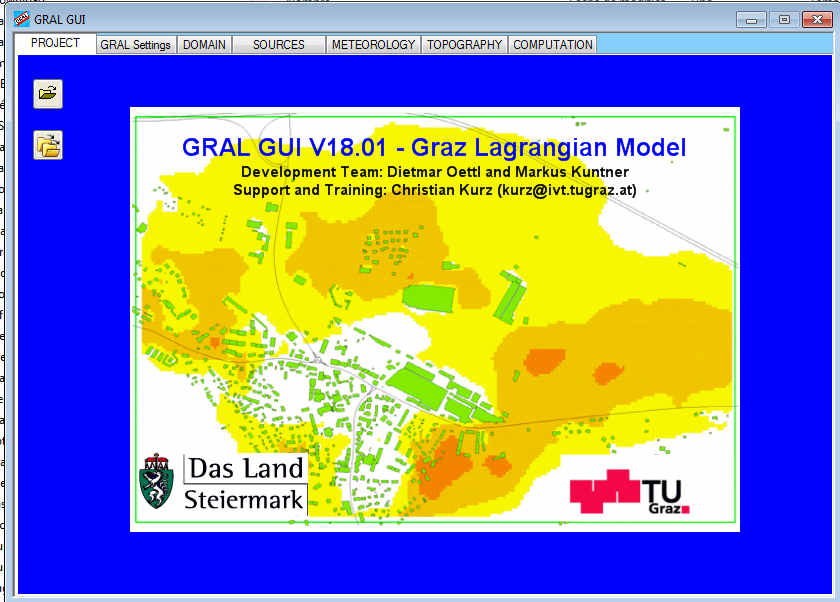
 The 4th Graz Lagrangian Model - GRAL User Workshop will be held in Innsbruck, Austria, on 12 – 13 March 2019. This recent lagrangian model is offered with a free GUI available in both Linux and Windows and has a special module focused on odour dispersion modelling. The workshop aims at giving an overview about all new developments, and it offers a distinct possibility for an informal exchange with other users and their specific experiences.This workshop is free.
The Graz Lagrangian Model - GRAL - was initially developed in 1999, and has been used extensively in regulatory assessments and scientific studies. The initial driver for the development of GRAL was the need for a model that could deal with the frequent low-wind-speed conditions (< 1.5 m s-1 for up to 90 per cent of the time) in the inner-Alpine basins of Austria. Some papers have recently being presented that compares the use of the GRAMM/GRAL in some odour emitting facilities. This software is freeware, but the code is unfortunately closed.
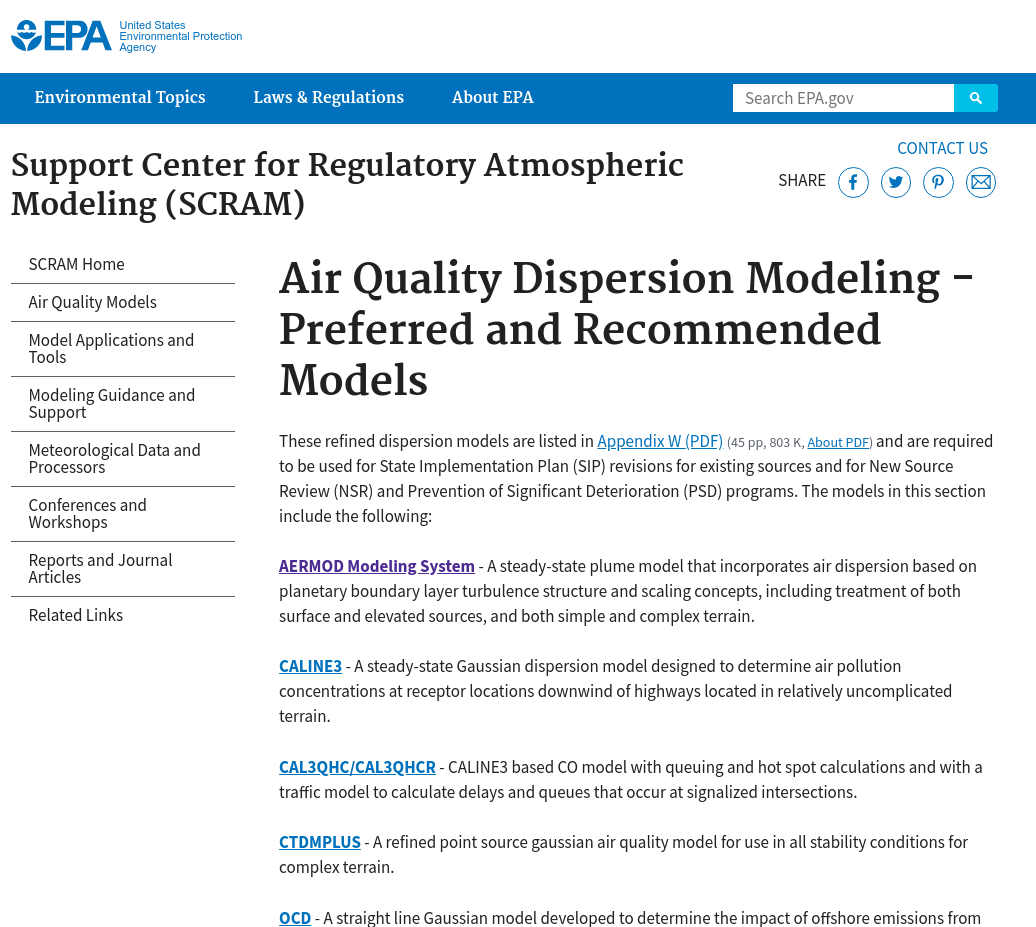 The website of the Support Center for Regulatory Atmospheric Modeling (SCRAM) no longer includes the CALPUFF model as a recommended dispersion model. This means that one of the most widely dispersion model used for odour modelling is not recommended by the US EPA any more. This decision has serious consequences for the odour community.
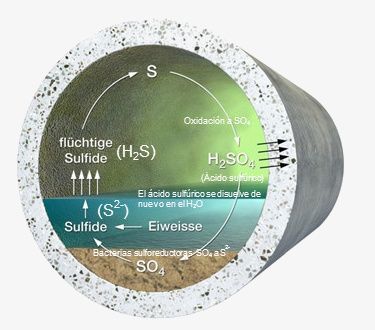 Sewervac new mathematical modeling tool for the sulfur ion allows to model the routes of the sulfide ion to identify at which points we will have the highest sulfide’s concentrations and consequently hydrogen sulphide (H2S), the conversion rates of sulfur to hydrogen sulphide, the origin of the hydrogen sulphide peaks and what it can be done to avoid it.