 Meteosim has launched now "Metdata", the first worldwide meteorological modelled data-set for performing simulations using AERMOD, CALPUFF and ADMS dispersion models with open and transparent pricing. Weather series are generated through the combined use of modelling data by the Weather Research and Forecasting System (WRF) meteorological model with remote sensing data and instrumental information worldwide.
There are a few companies around in the globe that sell meteorological data for dispersion modelling. However this is the first one to our knowledge that offers a public and transparent pricing to acquire meteorological data for your modelling. With "Metdata", the company Meteosim offers a flexible and fast way to calculate costs of met data acquisition. For example, the price for a WRF set of data ready for CALMET/CALPUFF varies between 250€ for 1 year of data and a resolution of 9 km, and 4250 € for 5 years of data and a spatial resolution of 1 km.
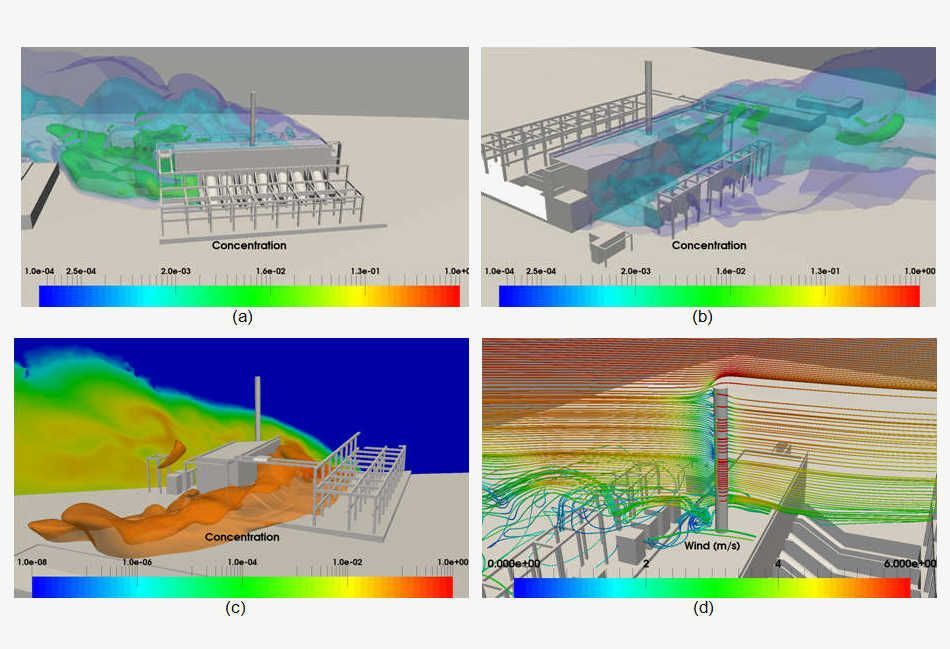 In this sewage plant under consideration, the wastewater is moved vertically using eight Archimedes screw pumps. During the process of moving the wastewater upward, there is an emission of H2S from the surfaces of the Archimedes pumps. Traces of H2S have been detected inside of the building that houses the pump engines.
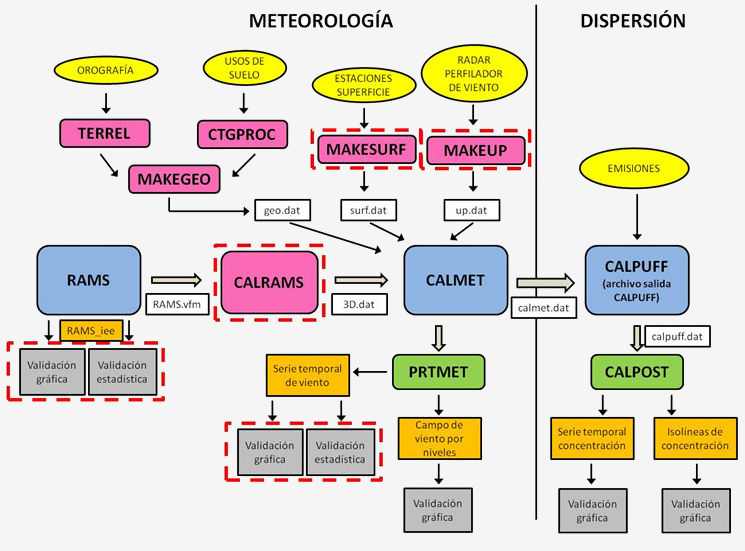 The current problems in relation to odor pollution episodes make it necessary to have methods to assess odor impacts. Such assessment can be performed using dispersion models that allow to estimate odor concentrations considering the emissions, the meteorology and the topography, among other data.