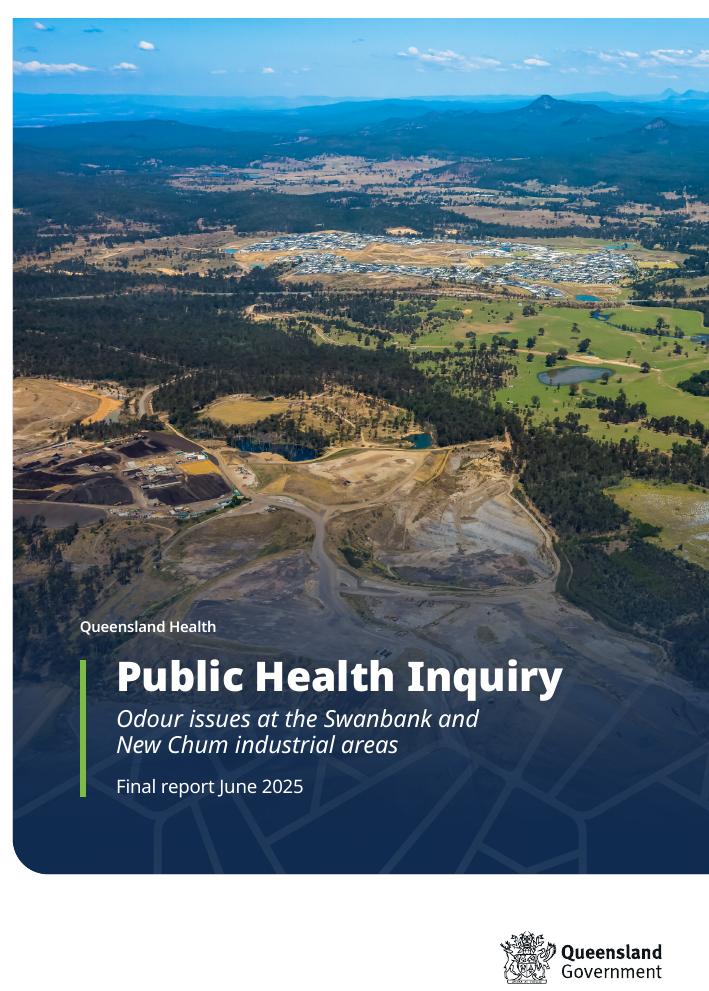
In Ipswich, Queensland, Australia residents have for some time reported persistent odours coming from nearby industrial and waste facilities at Swanbank and New Chum. These odours have caused discomfort and concern among the community, with some attributing health issues like respiratory problems and nausea to the pollution. The situation prompted local leaders and government authorities to take notice after many residents raised complaints.
To address these concerns, a Public Health Inquiry was initiated by the government to investigate the impact of these odours on community health. The Inquiry aimed to collect evidence and testimonies from residents, experts, and industry operators. The goal was to assess the extent of harm, identify causes, and recommend actions. The final report from the Swanbank Public Health Inquiry has been finally published this Wednesday, 19 November, and can be accessed at this link.
This Public Health Inquiry, Queensland's first of its kind, was commissioned in response to long-standing community concerns about odour impacts from the Swanbank and New Chum industrial precincts. It was led by Dr. John Gerrard, Chair of the Public Health Inquiry—Swanbank and New Chum industrial areas, with expert support from Dr. Lyn Denison, Robert Samut from the legal firm Barry Nilsson, Professor Rachel Thomson from the University of Queensland, and Susan Greenbank, Scott Brown, Matthew Brown, Noore Alam, and other staff from the Department of Health of Queensland.
The report finds that while the odours emitted are not toxic nor pose a cancer risk, they are highly offensive and have negatively impacted the health and wellbeing of thousands of Ipswich residents. Health complaints documented include nausea, headaches, coughing, wheezing, skin irritations, sleep disturbances, and stress. The Inquiry also acknowledges that odorous chemicals do not need to be at toxic levels to affect people’s health. Beyond physical health effects, the odours have social impacts, with residents reducing time outdoors, feeling reluctant to host visitors, and worrying about their community's reputation.
Among the eight recommendations, the report proposes immediate relief measures from the worst odours, options for long-term solutions such as constructing enclosed composting facilities or relocating composting operations, and expanded air monitoring programs to better assess community health effects. It also recommends auditing odour-producing companies and establishing an inter-departmental committee to oversee the implementation of these recommendations. The Queensland Government has accepted all the Inquiry's recommendations, emphasizing the importance of ongoing consultation with the community and stakeholders.
Actions already underway include stricter licence conditions and a court-ordered restraint to provide a long-term shift to best practice composting. Interim measures have also been implemented to lessen odour impacts. Learn more about this process here. https://www.health.qld.gov.au/research-reports/reports/review-investigation/swanbank-public-health-inquiry
If you find this article interesting, you might also be interested in these articles.
- Do odour impact criteria of different jurisdictions ensure analogous separation distances for an equivalent level of protection?
- The Sewer Corrosion and Odour Research (SCORe) program received the Global Grand Award, part of the International Water Association’s (IWA) 2014 Project Innovation Awards.
- What happened in the odour management world in 2024
- Australian and New Zealand Air Quality Champion Awarded to the Chief Editor of this website
- Highlights from the 2024 CASANZ and IWA Clean Air Conference
